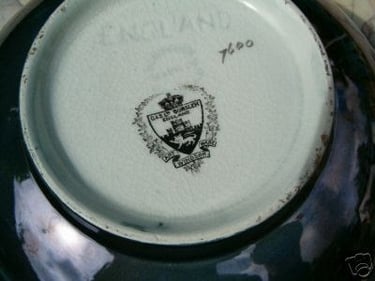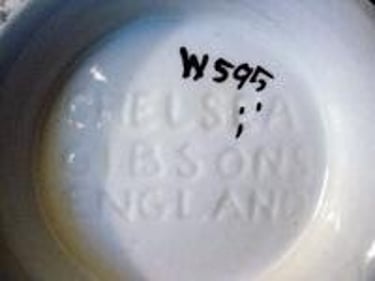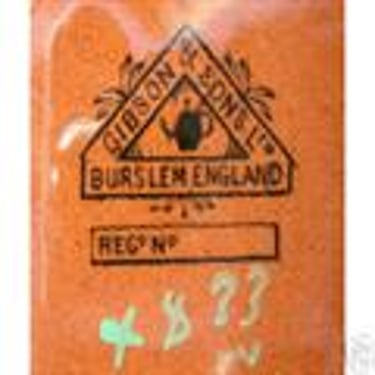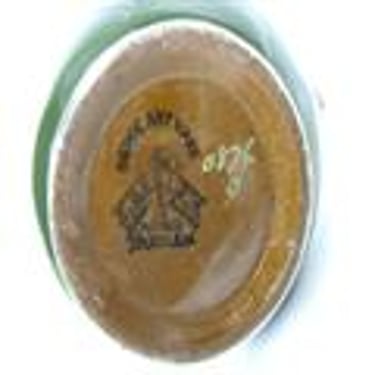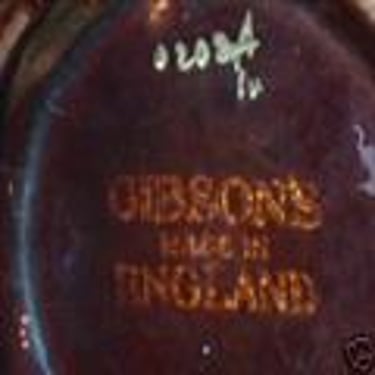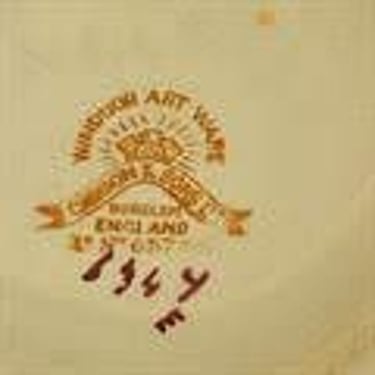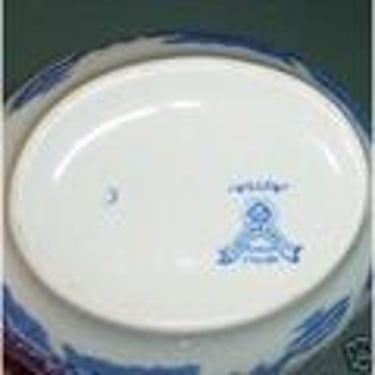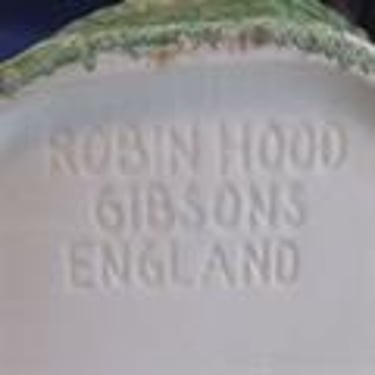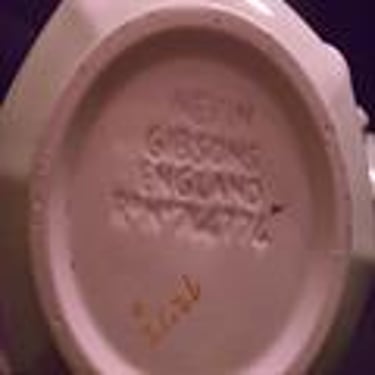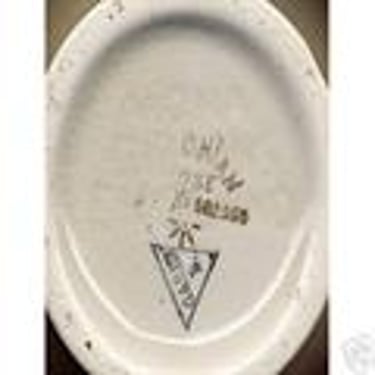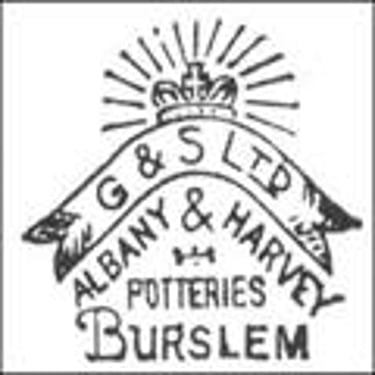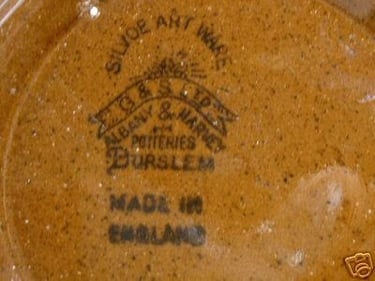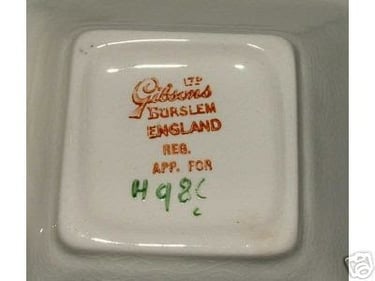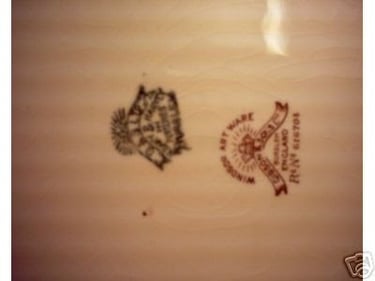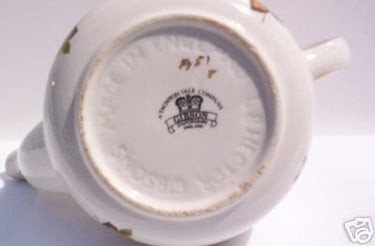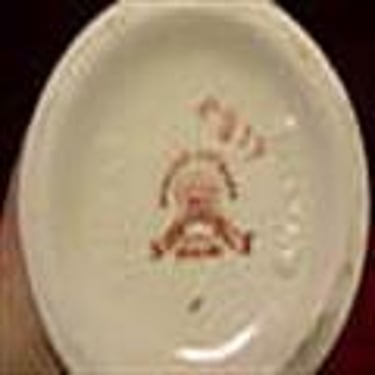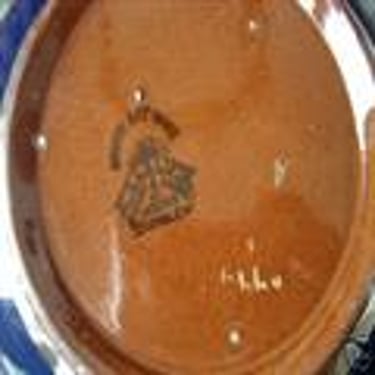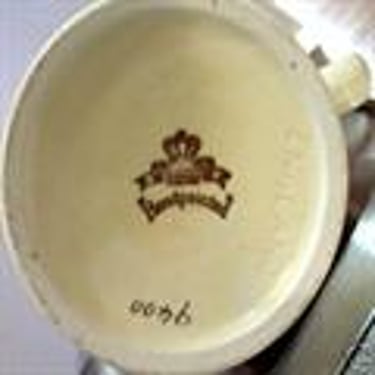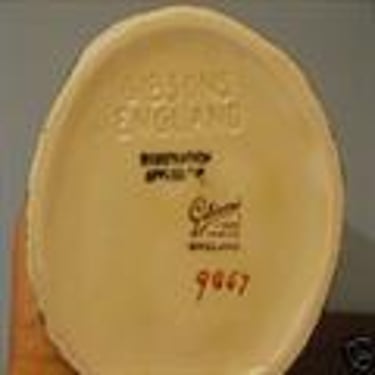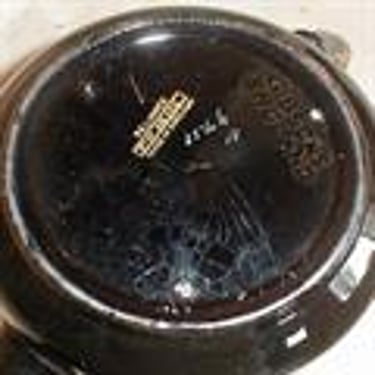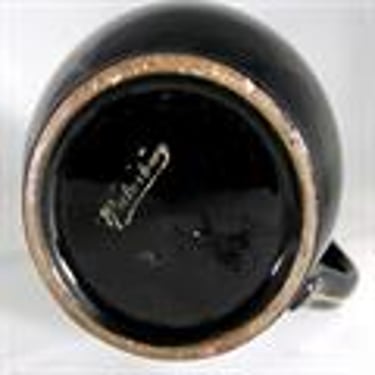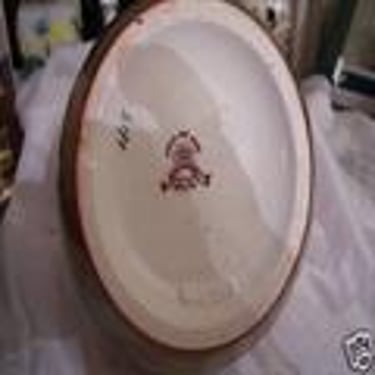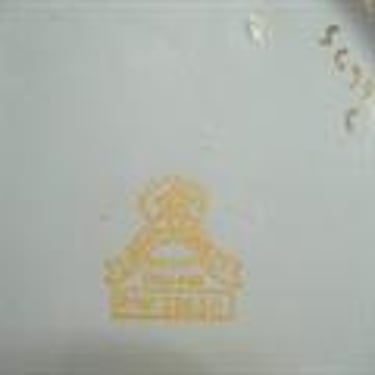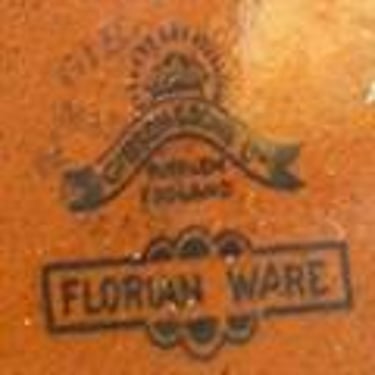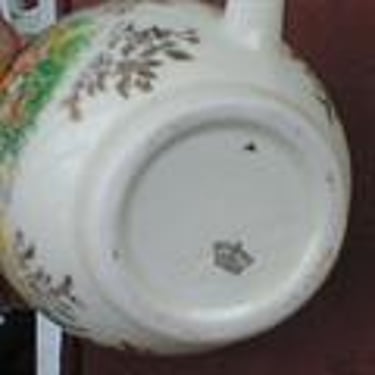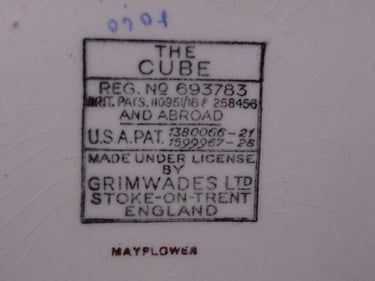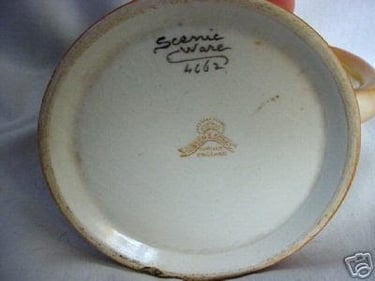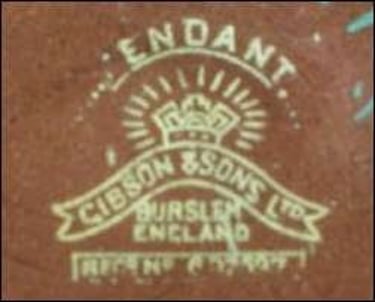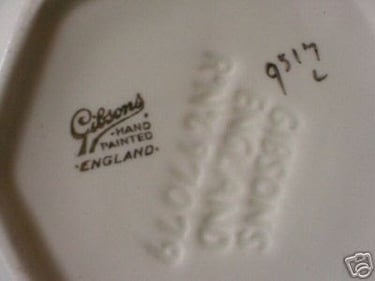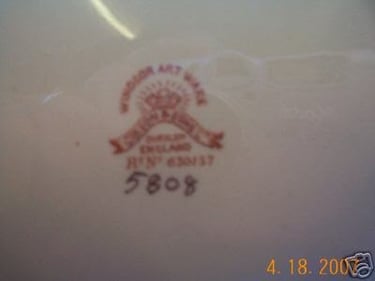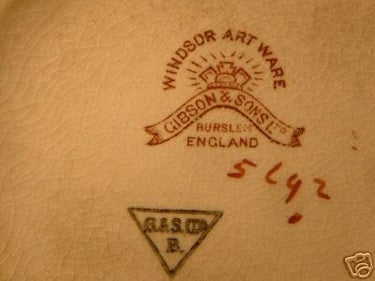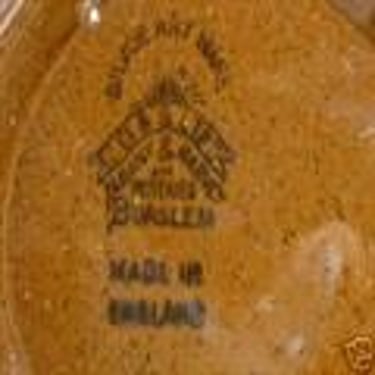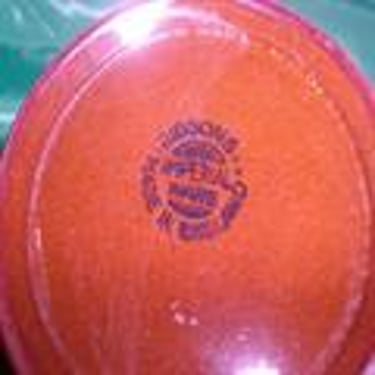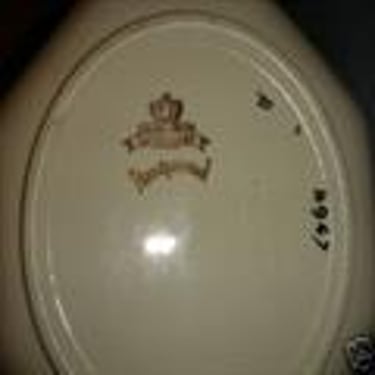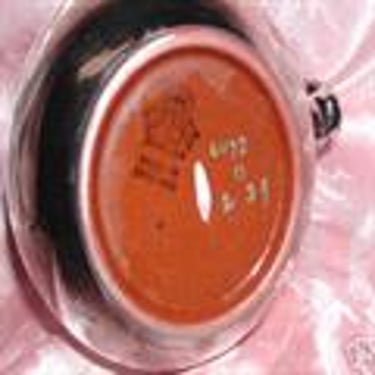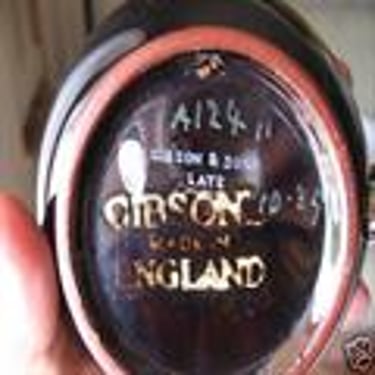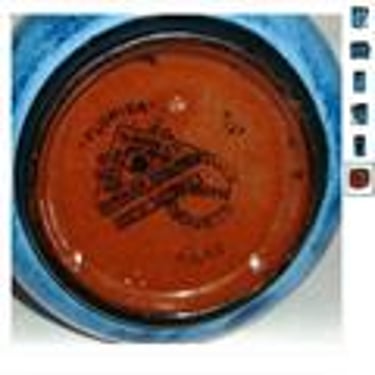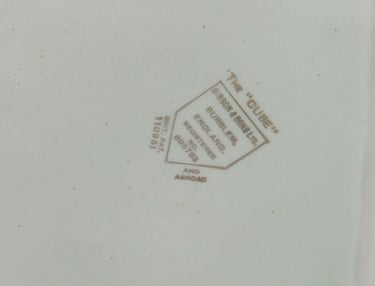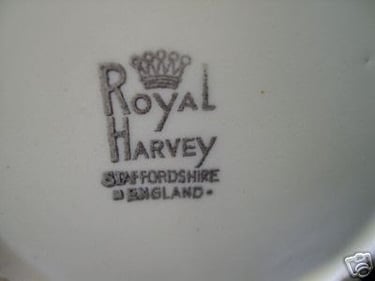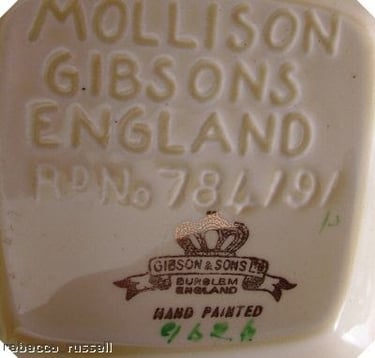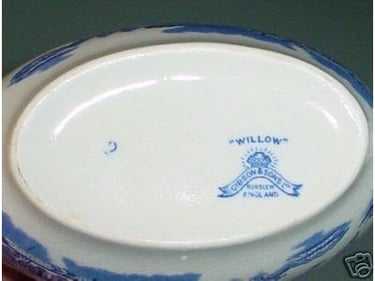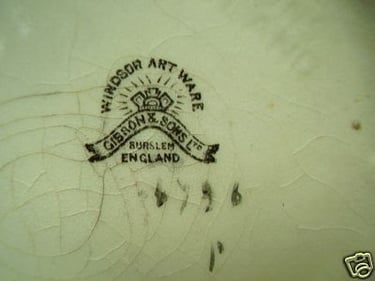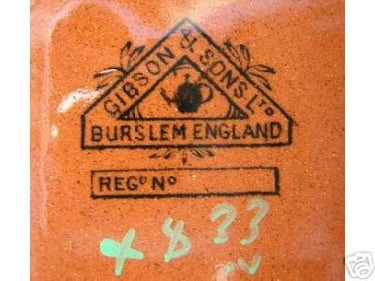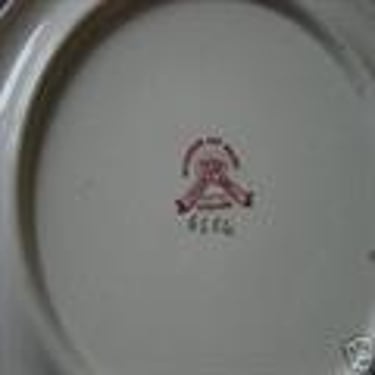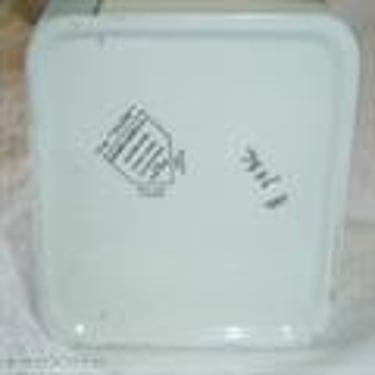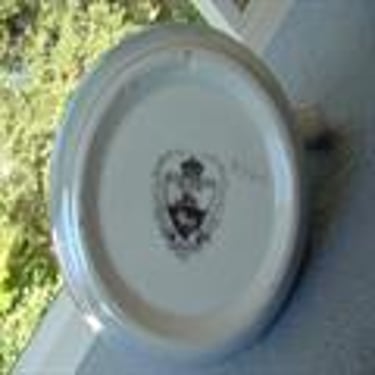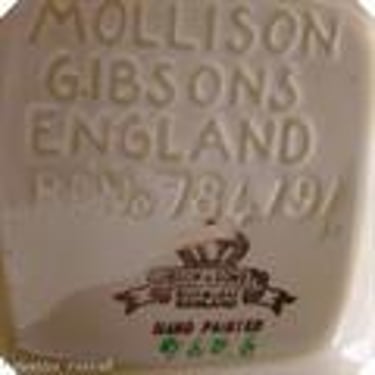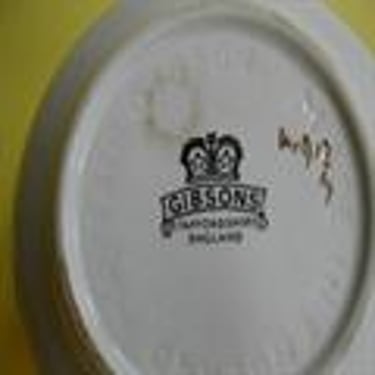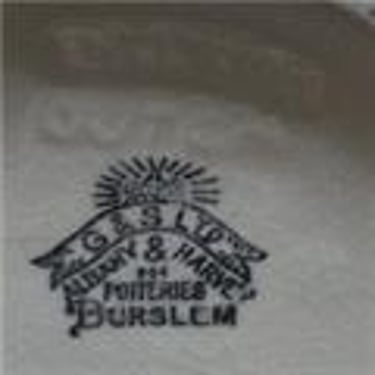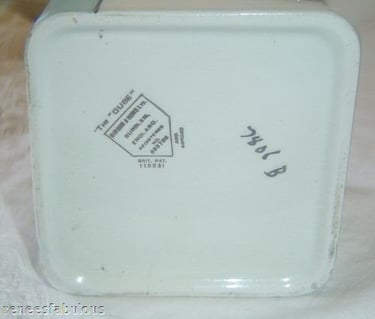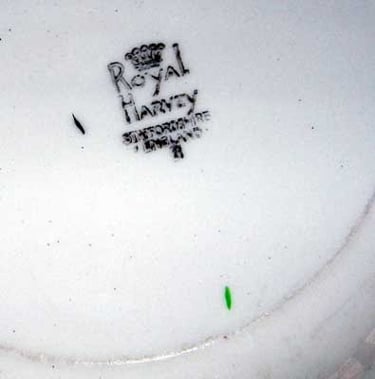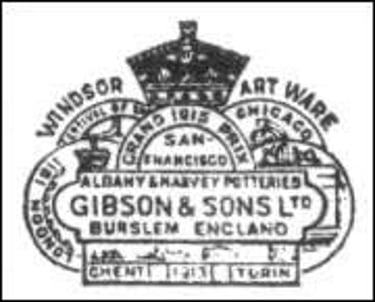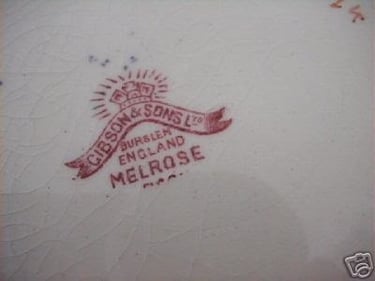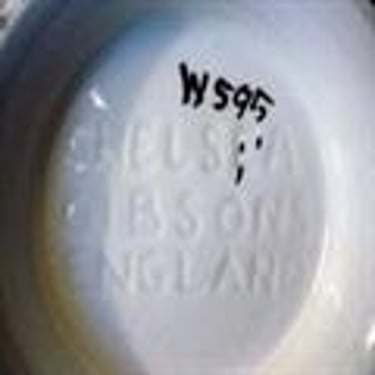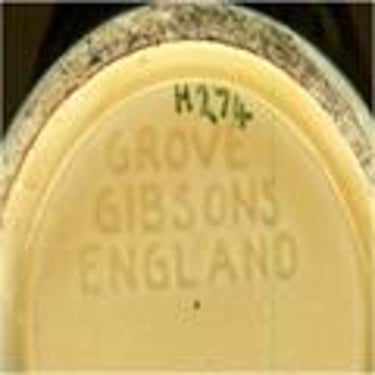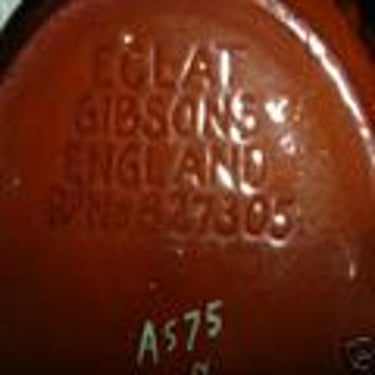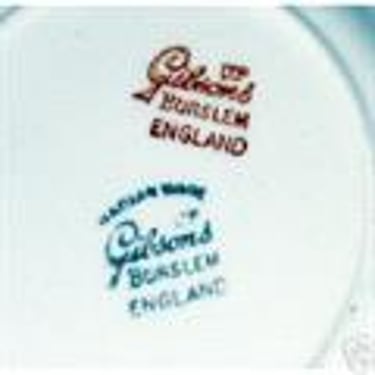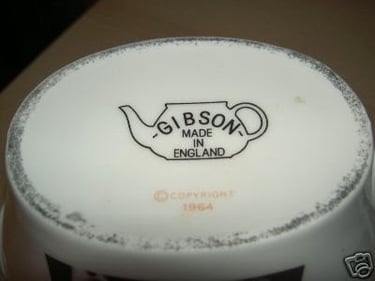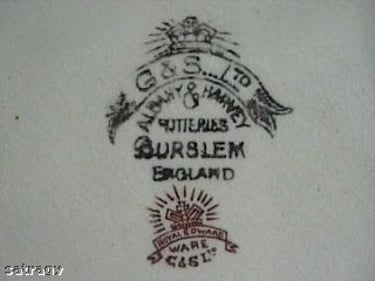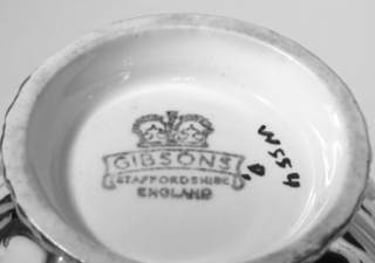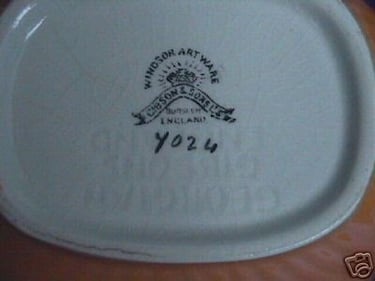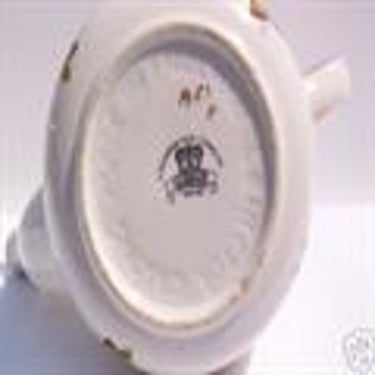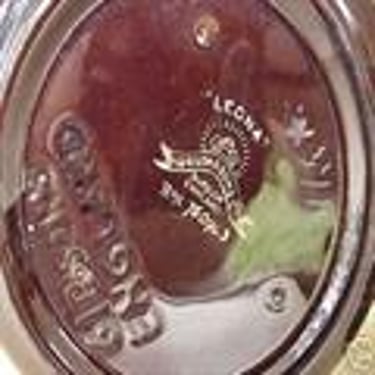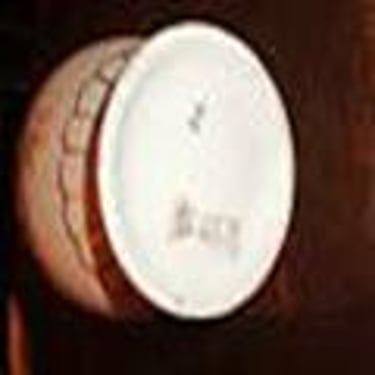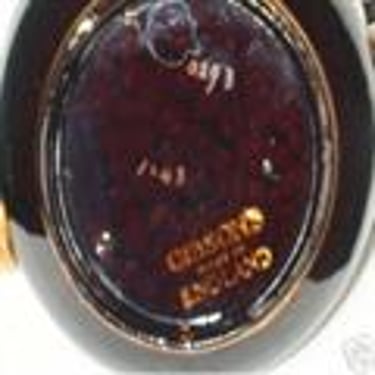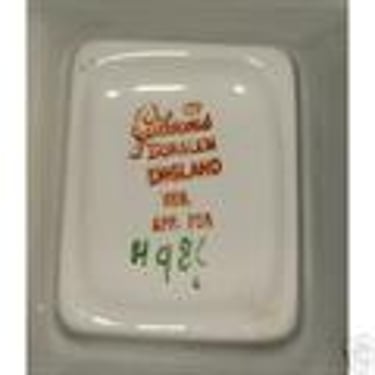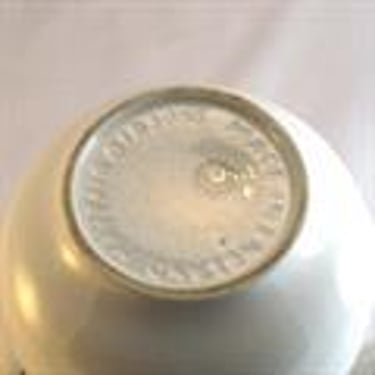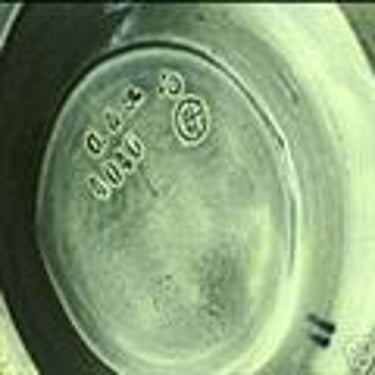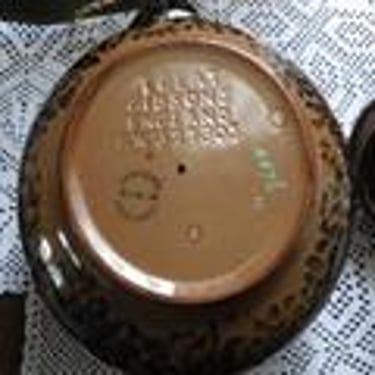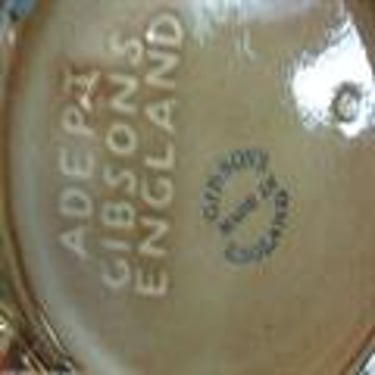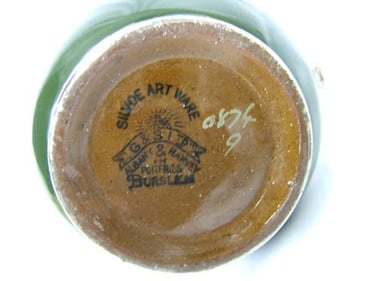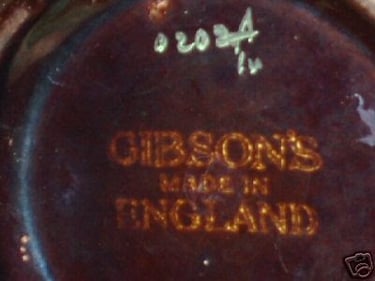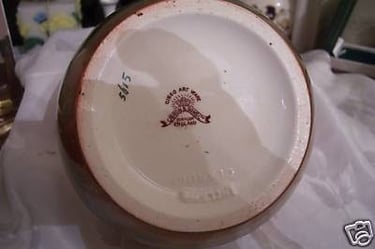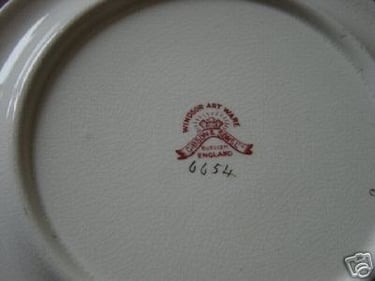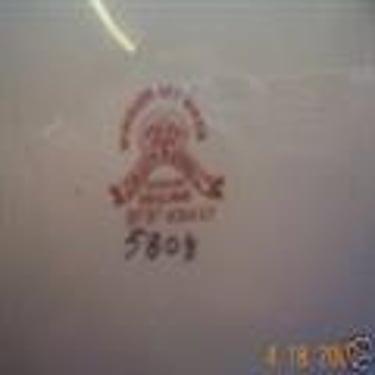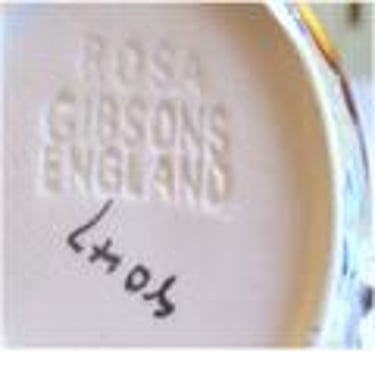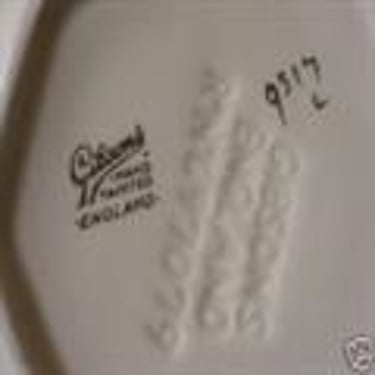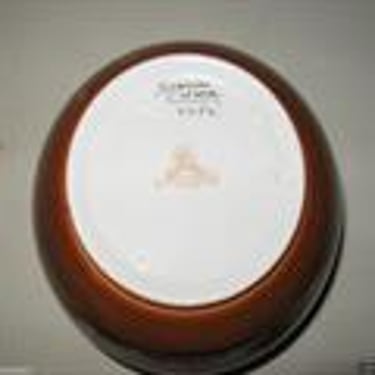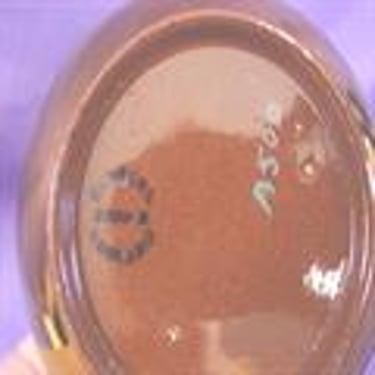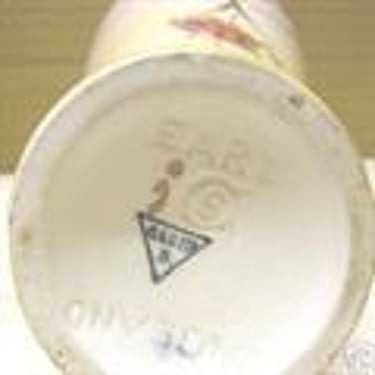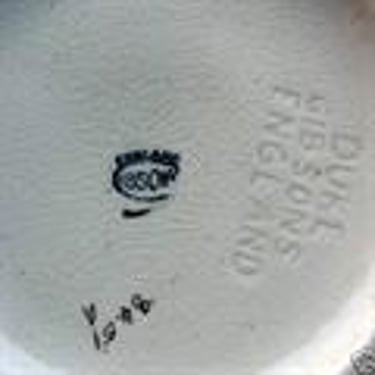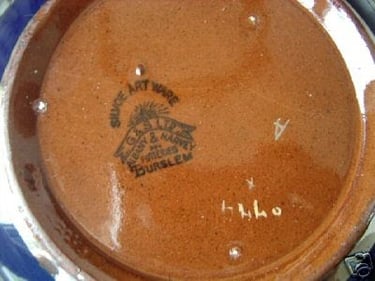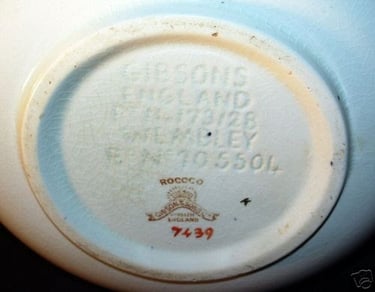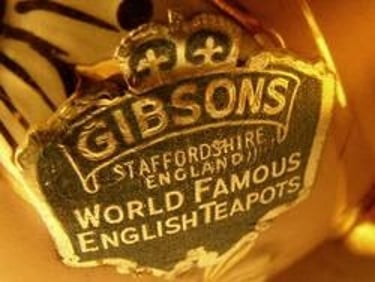
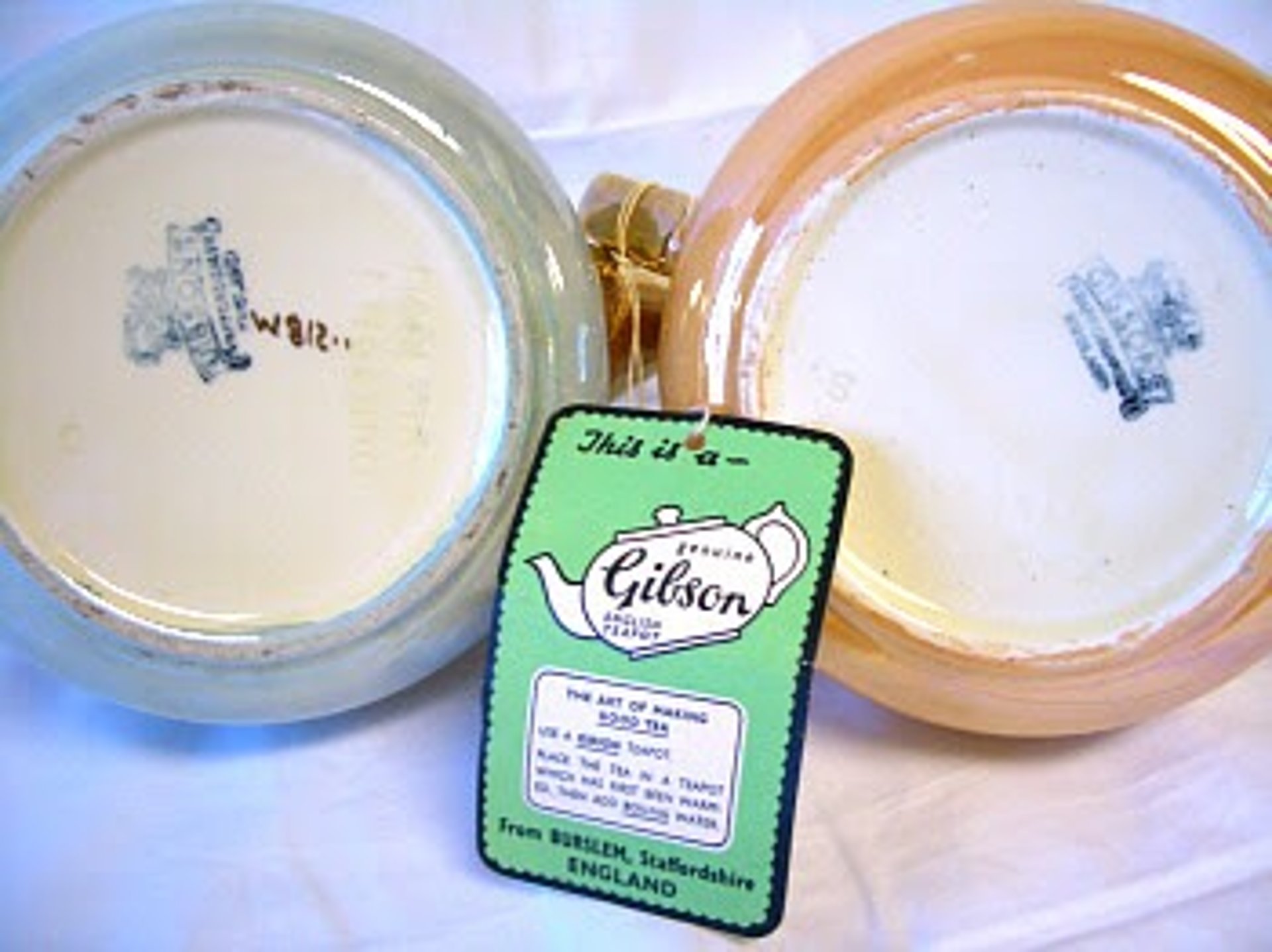
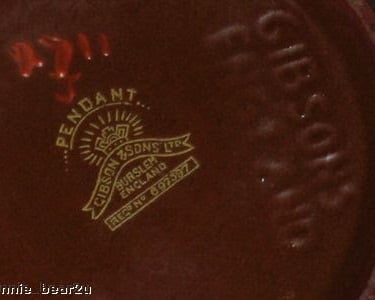
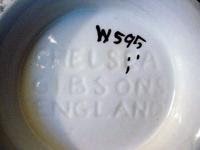
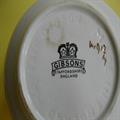
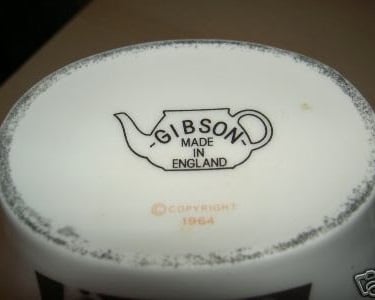
Throughout the hundred years that Gibson & Sons operated as a pottery manufacturer, the company used a number of different trademarks and backstamps on their wares. These marks were typically applied to the base of pieces and often included the company name and reference to Staffordshire, England. Changes in design and wording occurred over time as branding styles evolved.
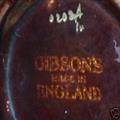
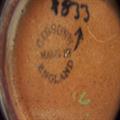
Many of the marks also included phrases such as “England” or “Made in England,” particularly on pieces produced for export during the twentieth century.
Late 1800s – Early 1900s
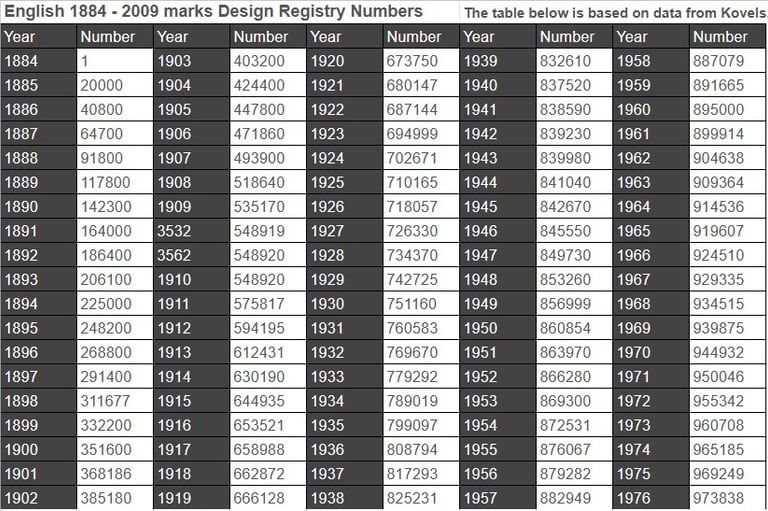
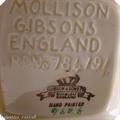
Early marks usually featured "G & S Ltd" or “Gibson & Sons” along with “Staffordshire” or “England.” These stamps were generally simple and practical, reflecting typical pottery branding of the period. Registration Marks can identify the year - see the registration dates below taken from Kovels.
1910s – 1920s
Backstamps began to show more decorative styling. Some marks incorporated curved text layouts, decorative borders, or additional wording related to the company name.
1930s – 1940s
Marks increasingly included “Made in England,” reflecting export requirements and the growing international market for British tableware.
1950s – 1960s
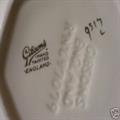
During the mid-twentieth century, the company used several variations of printed backstamps, often paired with pattern names or numbers. The typography and layout became more modern in appearance.



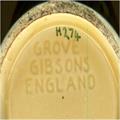
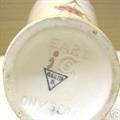


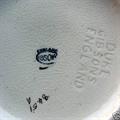


Late 1960s – 1970s
Later marks tended to be simpler again, commonly showing “Gibson” and “Staffordshire, England.” Or "A Taunton Vale Company". These stamps were typically printed in a single colour and used across a wide range of tableware patterns.
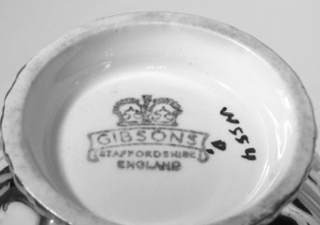



From 1842 to 1883, British manufacturers used the English Registry diamond mark to identify registered designs.
After 1883, this system changed and the diamond mark was replaced with “Rd No” (Registered Number) followed by a sequential number.
From January 1884, registered designs, trademarks, and patents were recorded using these numbers. Ceramics represented only a small portion of registered products, as registrations also covered shapes, patterns, and many other manufactured goods.
The table below shows approximate registration number ranges by year. These numbers indicate the earliest possible manufacturing date, although registered designs were often used for many years afterwards.
GIBSON POTTERY MARKS
GALLERY - MARKS