
In the heart of Burslem — the Mother Town of the Potteries — Gibson & Sons emerged as one of the long-lasting names in British earthenware. Their story is woven into the industrial rhythm of Stoke-on-Trent: bottle kilns, railway sidings, skilled hands, and the quiet pride of craftsmanship passed from one generation to the next.
At the centre of it all stood Samuel Gibson (1843– ), born in Tunstall and shaped by the trade from an early age. Beginning work at just ten years old, he progressed through the packing house, glass warehouse, and counting house, acquiring the kind of practical, ground-up knowledge that defined Victorian pottery success stories. By the mid-1870s, Gibson was ready to build something of his own.
Foundations (1875–1884)
1875 – Samuel Gibson entered into a partnership with Robert Sudlow, trading as
Gibson, Sudlow & Co. at Bourne’s Bank, Burslem.
The firm initially specialised in jet and Rockingham ware, popular for their rich, dark finishes and decorative appeal. Yet ambition and independence soon reshaped the path.
October 1884 – The partnership dissolved.
Both men established separate ventures.
Rise of Gibson & Sons (1885 onwards)
1885 – Samuel Gibson began trading as Gibson & Sons at the
Albany Potteries, Moorland Road, Burslem.
The works expanded steadily, evolving into the Albany & Harvey Potteries, located near Burslem Station. By the turn of the century, Gibson & Sons had become a substantial industrial presence.
1905 – Incorporated as Gibson & Sons Ltd
Samuel Gibson served as Chairman and Managing Director, joined actively by his sons:
A. H. Gibson
F. W. Gibson
Sydney Gibson
Ernest Gibson
A Firm at Full Strength (1906)
By 1906, Gibson & Sons employed approximately 500 workers — a major operation by Potteries standards.
That same year marked a civic milestone:
1906 – Sydney Gibson elected Mayor of Burslem
Contemporary accounts described Samuel Gibson as a respected industrialist and public figure — a Liberal, Free Trader, philanthropist, and ardent supporter of education and worker welfare.
Masters of the Teapot
Though Gibson & Sons produced a wide range of wares — tea ware, dinnerware, kitchenware, tankards, ashtrays, and art ware — they became especially celebrated for teapot manufacture.
Between c.1907–1910, the company created a showpiece that secured lasting fame:
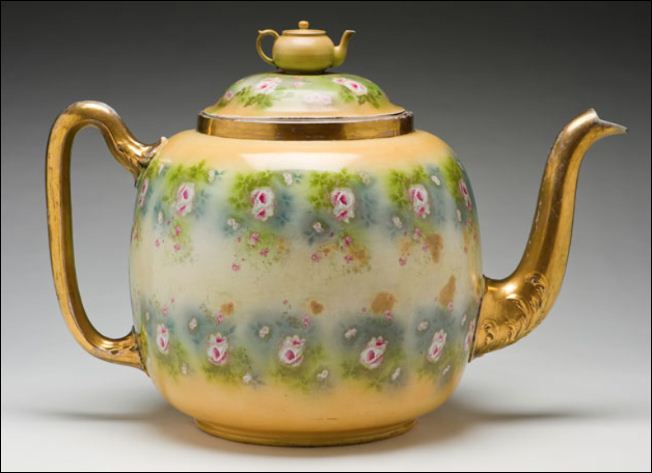
“The Largest Teapot in the World”
Capacity: 1,024 cups of tea
Exhibited internationally, including Ghent (1913), it became both spectacle and statement — proof of technical skill, scale, and playful confidence.
Factories & Expansion
Operations centred around:
Albany Pottery – Moorland Road, Burslem
Harvey Pottery – Harvey Street, Burslem
Additional usage:
Chelsea Works (c.1925–30)
The dual-works structure reflected Gibson’s growth from a specialist manufacturer into a producer of “almost every kind of ware.”
Trade Names & Decorative Lines
Gibson & Sons marketed wares under several well-known names:
Royal Harvey
Windsor Art Ware
Silvoe (Silvo) Art Ware
Duchess Art Ware
Royal Alexandra Ware
Windsor Art Ware
These lines ranged from practical domestic ware to decorative and embossed art pottery.
War & Adaptation
During the Second World War, Gibson & Sons operated under the
Wartime Concentration Scheme.
Production shifted to:
Undecorated domestic ware
Canteen ware for the British Armed Forces
Government contract pieces often bore GR / G VI R cyphers and dated backstamps.
Ownership Changes & Later Years
1947 – Business sold
1949 – Acquired by Howard Pottery Co. Ltd
1965 – Albany Pottery sold; operations moved to
Howard Pottery, Norfolk Street, Shelton
Corporate transitions followed:
1974 – Howard Pottery Group purchased by Taunton Vale Industries
1979 – Acquired by Staffordshire Potteries Ltd
The Gibson name appears to have remained in use until approximately the mid-1970s.
Marks & Identity
Most wares carried:
Full company name Gibson & Sons Ltd
Script “Gibsons”
Initial marks such as G & S Ltd
Place indicators: Burslem → later Staffordshire
Note:
No connection exists between Gibson & Sons (UK) and
Gibson Overseas Inc. (USA, founded 1979).
Legacy
Gibson & Sons stands as a classic Potteries success story:
family enterprise, industrial scale, design variety, and enduring recognition — particularly in the world of British teapots.
Their wares continue to circulate through collections, auctions, and family cupboards, carrying with them the character of Burslem’s ceramic heritage.
GIBSON AND SONS - A BURSLEM STORY


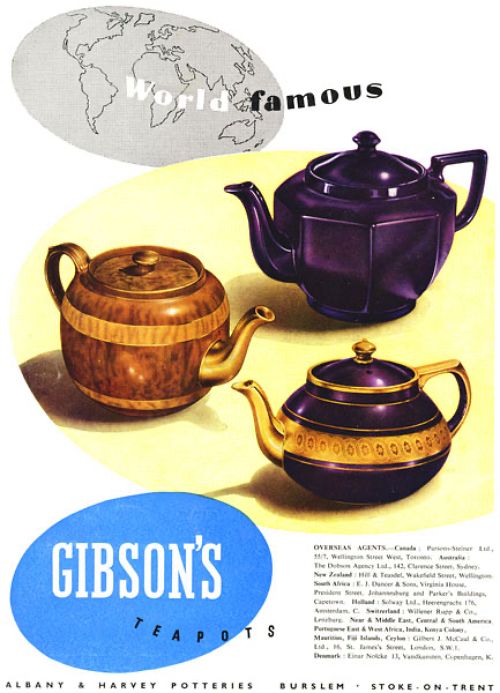
Gibson and Sons advertisement in The British Pottery Manufacturers Federation Standard Exporter (1929), image courtesy: Manchester Metropolitan University Special Collections & potteries.org - click image to link to site
Gibson's 'Largest Teapot in the World'- note the 'normal' teapot used as the lid handle potteries.org - click image to link to site
Gibson Fine English Teapots advert: December 1960 potteries.org - click image to link to site
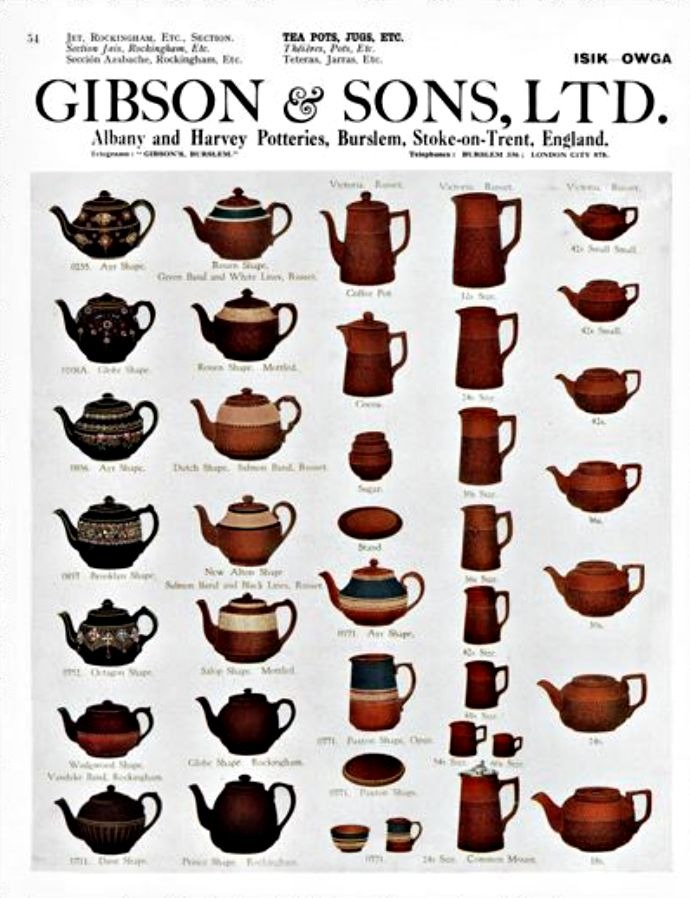
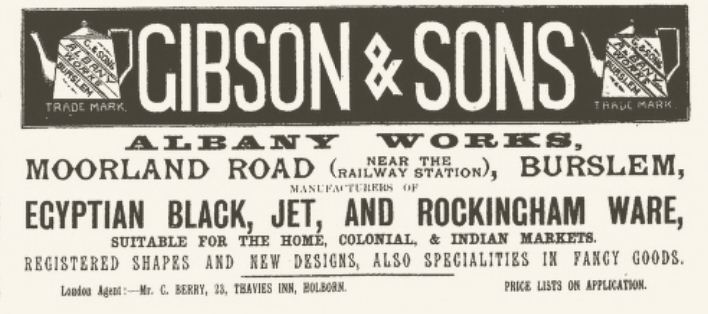
Pottery Gazette, January 1885 potteries.org - click image to link to site
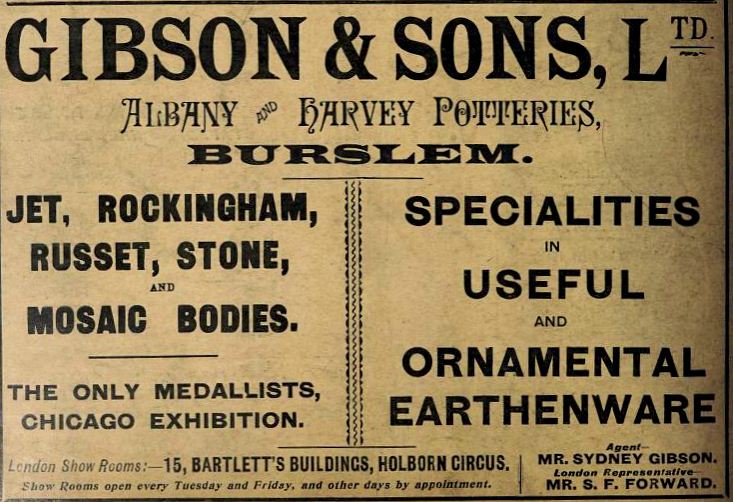
The Pottery Gazette, December 1910 potteries.org - click image to link to site
Pottery Gazette and Glass Trade Review, January 1950 potteries.org - click image to link
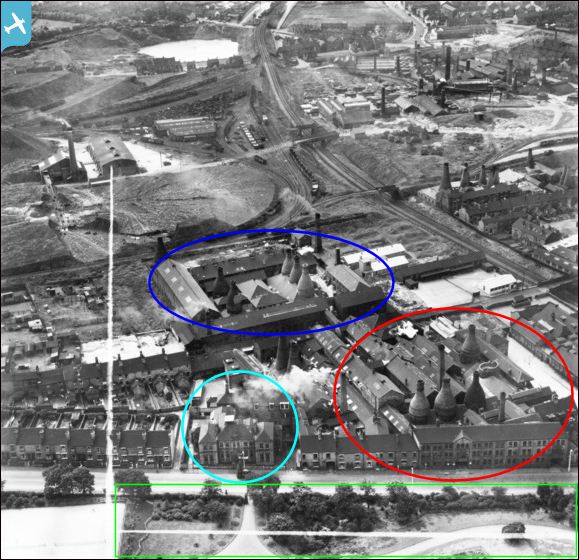
The Albany and Harvey Potteries and Environs, Burslem, 1951 Image supplied by Britain from Above. This aerial photograph, marked with white editing lines by Aerofilms Ltd, shows the Albany and Harvey Potteries. The tip of the aircraft wing is visible in the lower left corner. In the foreground (green rectangle) is the edge of Burslem Park, opened in 1894. Moorland Road runs between the park and the pottery works. The light blue circle marks the Haywood Home Hospital, built in 1887 and still standing today (2021). The Albany (red) and Harvey (blue) Potteries no longer stand; industrial units now occupy the site. In the background is the Sneyd Colliery & Brick Works. potteries.org - click image to link to site
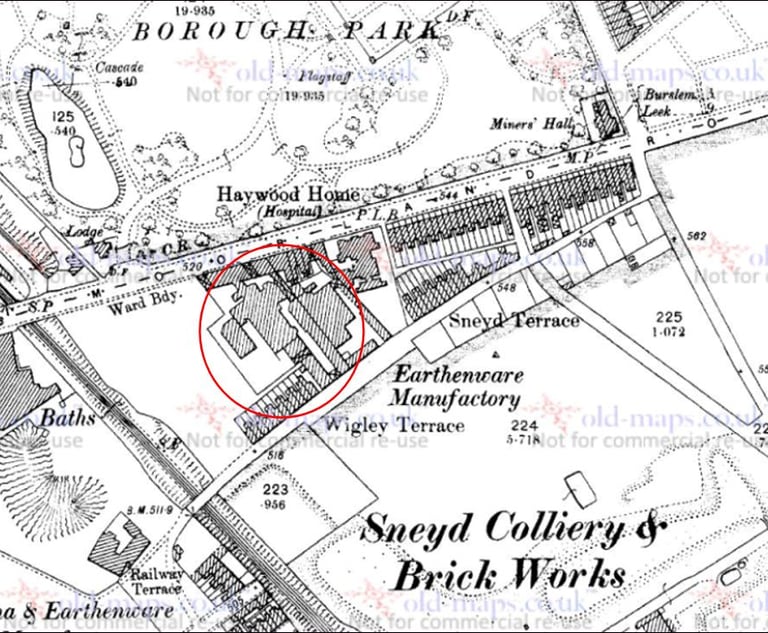
1899 map showing the Gibson & Sons Albany and Harvey Potteries on Moorland Road, Burslem. potteries.org - click image to link to site
Gibson & Sons – Industry with Responsibility
In the industrial towns of late nineteenth- and early twentieth-century Staffordshire, factory life was demanding and often hazardous. The Potteries were built on skill and endurance, but also long hours and modest wages. Against this background, the employment practices of Samuel Gibson of Gibson & Sons Ltd, Burslem, stand out as notably progressive.
By the early 1900s, Gibson & Sons employed around 500 workers at the Albany and Harvey Potteries. At a time when labour protections were limited and welfare provision uneven, Gibson introduced measures reflecting clear concern for employee wellbeing.
Working Conditions in the Potteries
Pottery manufacture was labour-intensive and frequently dangerous. Workers commonly faced:
10–12-hour working days
Exposure to silica dust and respiratory disease
Lead poisoning from glazes
Heat from bottle ovens
Wage “stoppages” for breakages or faults
Although the Factory Acts had begun restricting child labour, economic insecurity remained widespread.
Gibson’s Welfare Measures
Contemporary accounts describe “the warmest relations” between Gibson and his workforce.
Abolition of Stoppages
Gibson removed wage deductions for breakages — a significant reform providing greater fairness and stability.
Friday Wage Payments
Wages were paid on Fridays so families could shop at Saturday markets and leave work earlier, encouraging leisure and family time.
Savings Bank (5% Interest)
An in-house savings bank paid 5% interest, promoting thrift and financial security at a time when banking access was limited.
Sick Club
A works sick club supported families when illness struck — particularly important in heavy industry.
Loyalty Rewards
The firm made financial gifts to workers with ten or more years’ service; 100 of 500 employees qualified, indicating unusual retention and stability.
Education Support
Gibson donated £1,000 to Burslem’s Education Committee to provide food and clothing for needy children, reflecting a broader social philosophy.
Industrial Paternalism
Gibson’s approach reflects industrial paternalism, common among certain Nonconformist Victorian employers who believed in moral responsibility towards workers. While some firms offered little beyond wages, Gibson’s measures compare favourably within the Potteries context, where harsh conditions persisted well into the twentieth century.
Evidence of employee regard is seen in a 1895 presentation of a portrait and address to Gibson from his workforce — a gesture signalling respect and loyalty.
Conclusion
Samuel Gibson operated within the framework of Edwardian industry, yet his policies demonstrate a deliberate effort to combine commercial success with worker welfare. In a region defined by kilns and heavy labour, his legacy includes not only ceramic production but an example of employer responsibility shaped by civic pride and practical humanity.
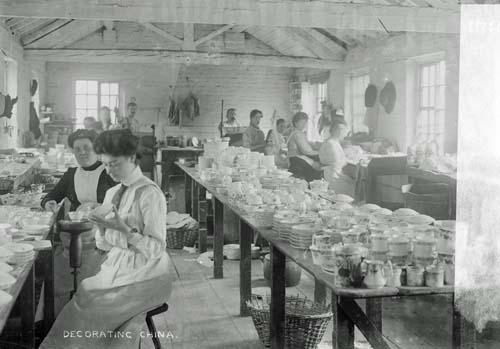
Warrillow Collection, Keele University Library, no.172- click image to link to site
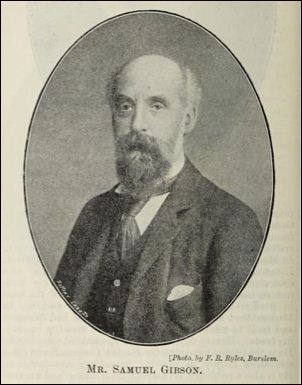
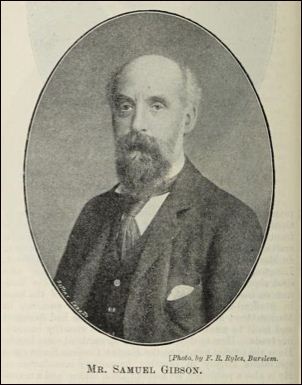
Samuel Gibson potteries.org - click image to link to site
Source
This article draws on contemporary material published in The Pottery Gazette, 1 November 1906, in the feature titled “The New Mayors of the Potteries – Mr Samuel Gibson (Burslem)”. The piece provides detailed insight into Samuel Gibson’s career, civic role, and employment practices at Gibson & Sons Ltd, Albany and Harvey Potteries, Burslem.